
Fillmore County Court Records After a Jail Arrest
A typical Fillmore County arrest moves in a sequence: arrest, booking at the sheriff's jail function, first appearance, prosecutor review, filed charges, and then a court case. The Fillmore County Sheriff's Office records the custody side at 900 G Street in Geneva. The court records after a jail arrest are created through the Nebraska trial court system after the Fillmore County Attorney files or declines charges.
The sheriff's booking information and the later court record can differ. A booking entry may list the arrest allegation known at intake, while the court file shows the formal count filed by the prosecutor, amendments, dismissals, bond orders, warrants, and the final disposition. For the custody side, use jail inmate records. For booking-photo access and mugshot limits, use jail mugshots. For filed charges after arrest, use the court channels below.
How to Find Fillmore County Court Records After an Arrest
Fillmore County does not publish a local jail roster, so the first custody confirmation point is the sheriff's office at 402-759-4441. Once the prosecutor files charges, the court record may be found through the Nebraska JUSTICE case search, the Nebraska court calendar, or the local court clerk offices. The Fillmore County Court and Fillmore County District Court Clerk both use the 900 G Street government address in Geneva, which makes Geneva the local point where arrest, court records, and release questions converge.
- Call the Fillmore County Sheriff's Office at 402-759-4441 to confirm current custody, booking date, release status, and whether a court case number is available.
- Search the Nebraska court calendar for a current or future Fillmore County hearing by court type, county, date, and last name.
- Use Nebraska JUSTICE case search for filed county court or district court records by party name or court case number.
- Contact Fillmore County Court at 402-759-3514 for misdemeanor, traffic, and county-court criminal records.
- Contact the District Court Clerk at 402-759-3811 for felony and district-court records.
The JUSTICE one-time case search is a paid state court tool. Research notes identify a $17 one-time search, access for three calendar days, up to 30 returned cases, and a possible 24-hour lag. Some Judicial Branch case-detail views may carry a separate per-case viewing cost. The free court calendar is narrower: it helps locate current and future hearing dates, not complete charge history.
The Nebraska JUSTICE case search is the state court channel for trial-court case lookup.
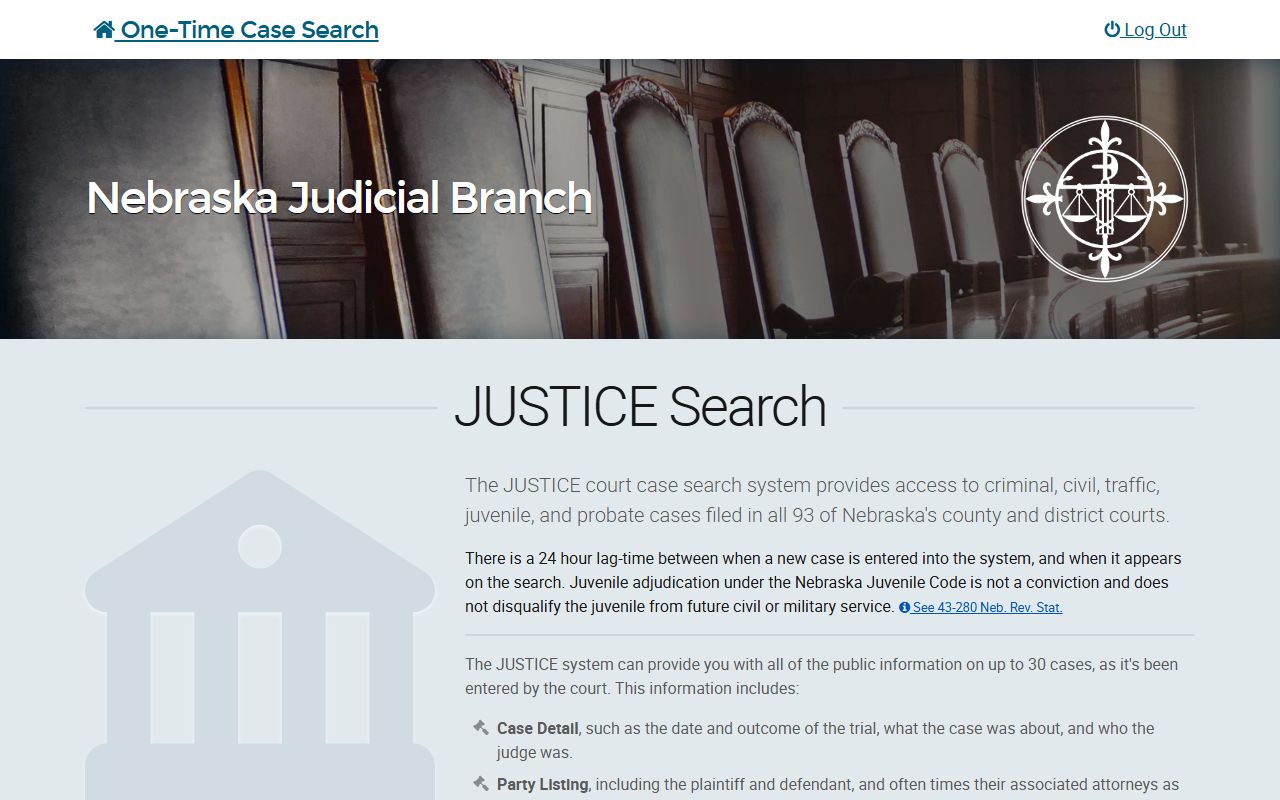
Use JUSTICE after the court case exists; it is not a substitute for calling the sheriff about a new booking that has not yet reached the filed-charge stage.
Court Records After Arrest and Calendar Search Fields
The court calendar is useful immediately after a jail arrest because a first appearance or next hearing may be posted before a user has a full case history. The calendar does not prove every charge or final outcome, but it can show whether a Fillmore County Court or District Court date has been scheduled.
| Lookup Tool | Field | Use | Important Limit |
|---|---|---|---|
| JUSTICE | Party Name | Search court records after arrest by defendant name. | Name searches can return multiple cases and may require paid access. |
| JUSTICE | Court Type | Narrow to County Court or District Court. | Choose the wrong court and a filed case may be missed. |
| JUSTICE | County | Select Fillmore for local cases. | A case transferred or filed elsewhere may not appear under Fillmore. |
| JUSTICE | Court Case Number | Open a specific filed case when the number is known. | A jail booking may not include the court case number at intake. |
| Court Calendar | Last Name | Check current or future hearings by defendant last name. | The last-name field requires at least two characters. |
| Court Calendar | Date | Check scheduled appearances. | The calendar is for current and future dates only. |
The Nebraska court calendar lists public hearing search fields for county and district court calendars.
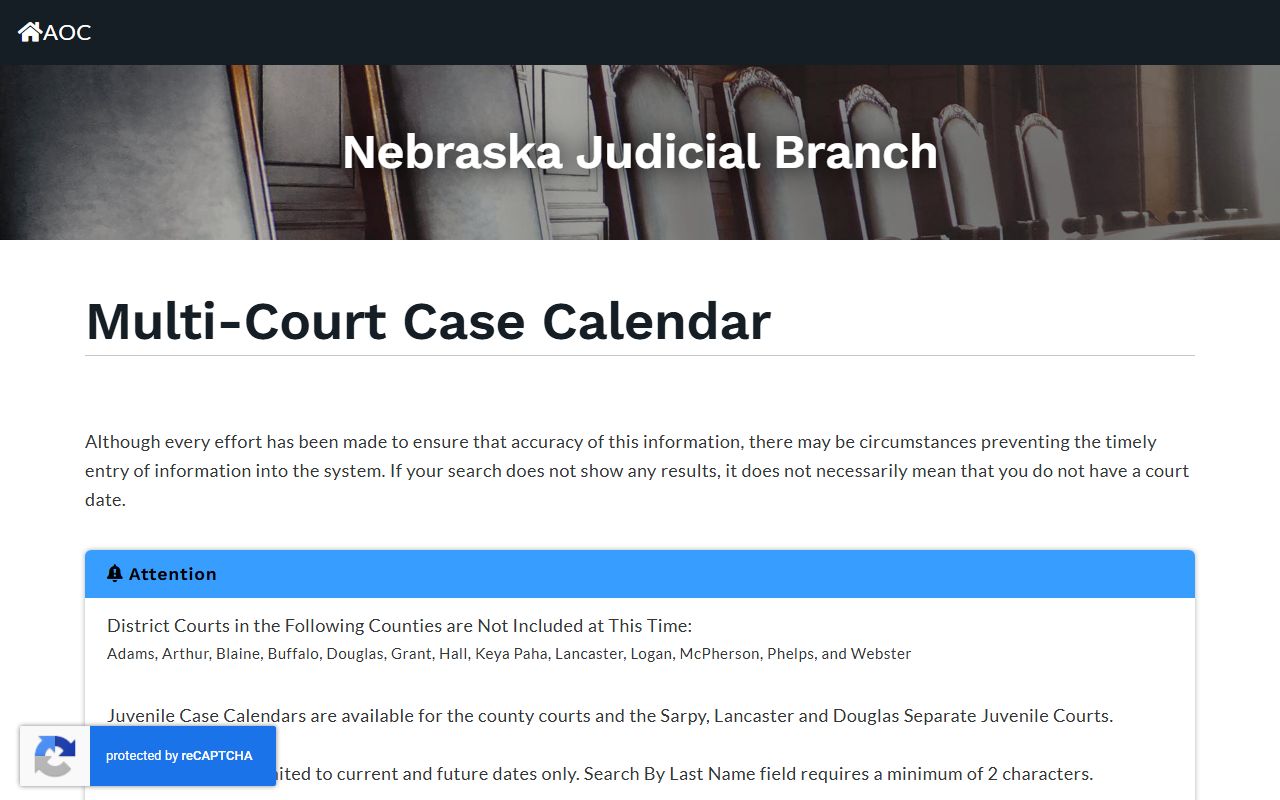
For a recent arrest, calendar results should be read with sheriff custody confirmation and clerk records because dates can change.
How Court Records After Arrest Start: Complaint, Information, and Indictment
The court record begins when a charging document is filed. In Fillmore County, the County Attorney is the local prosecutor for felony and misdemeanor crimes occurring in the county. Jill Cunningham is listed as Fillmore County Attorney, with an office at 129 N. 10th Street in Geneva and phone 402-759-3136. The sheriff books the arrest; the county attorney decides what charge to file; the court tracks the case after filing.
| Document | Who Files or Returns It | Common Use | What It Means for Records |
|---|---|---|---|
| Complaint | Prosecutor, often based on law-enforcement information | Common starting document for many criminal cases | Creates the filed accusation that appears in court records after an arrest. |
| Information | Prosecutor | Often used in felony prosecution after the case advances | States formal charges that may differ from the original booking allegation. |
| Indictment | Grand jury | Used when charges are returned through grand-jury process | Creates formal court charges through grand-jury action instead of prosecutor-only filing. |
The Fillmore County Attorney page identifies the local prosecutor and criminal prosecution role.
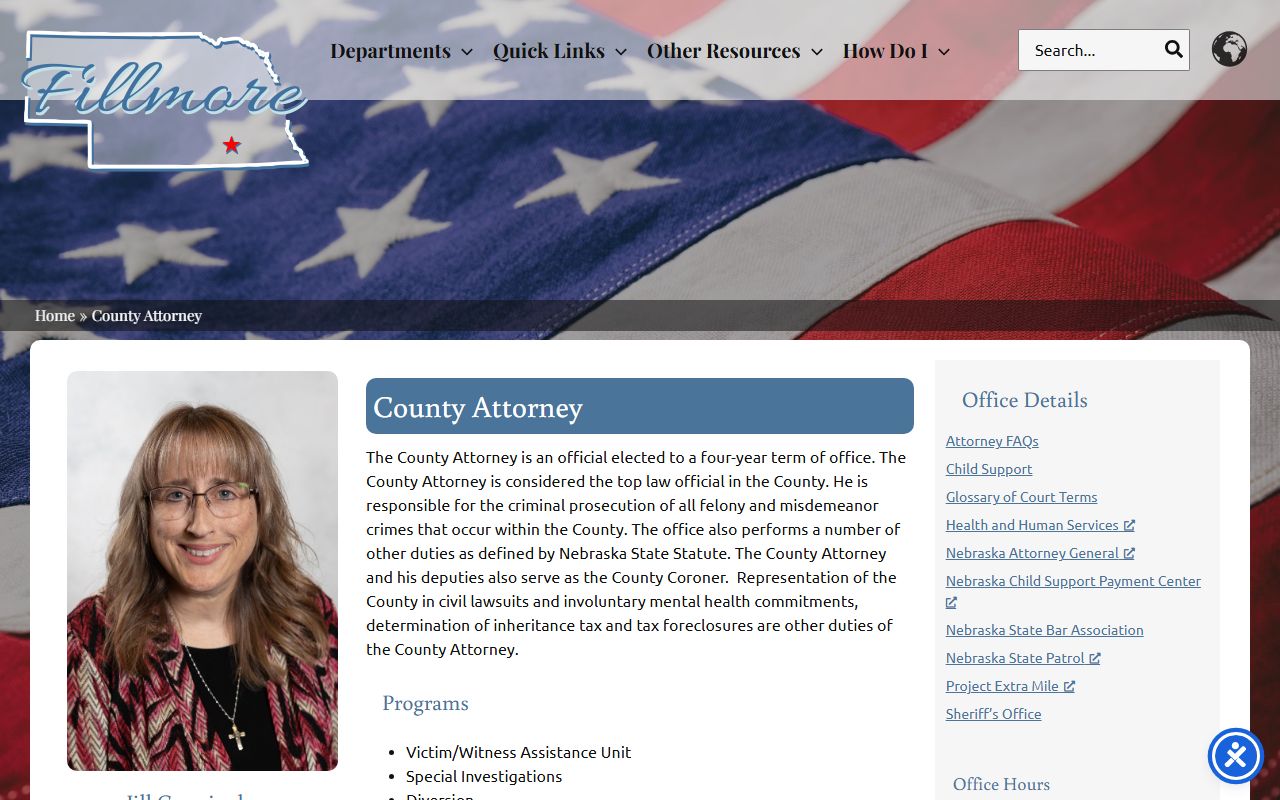
That prosecutor role is the bridge between arrest allegations recorded by the jail and court records that show filed charges.
Charge Status in Court Records After a Jail Arrest
Charges can change after the first court filing. A booking allegation may be amended after prosecutor review, a count may be reduced as part of a plea, a case may be dismissed, or a new count may be added. Court records after a jail arrest should therefore be checked by charge and status, not only by the first arrest label.
| Status | What It Means | Why It Matters |
|---|---|---|
| Pending | The charge remains open and has not reached final disposition. | Hearings, bond, plea negotiations, or trial settings may still be active. |
| Amended or Reduced | The filed charge changed from an earlier count or level. | The court record may no longer match the original booking charge. |
| Dismissed | The charge ended without a conviction on that count. | A dismissal is not the same as a conviction, but the record may still need careful reading. |
| Nolle Prosequi | The prosecutor chose not to pursue the charge. | The charge may be closed without trial, subject to the exact court entry. |
| Convicted | The person was found guilty or entered a guilty or no-contest plea accepted by the court. | The record moves from accusation to disposition and sentencing consequences. |
Bond, Release, and Court Records After Arrest
Nebraska bond law affects how long a person remains in custody after arrest. Research identifies Neb. Rev. Stat. 29-901 as the central release statute: bailable defendants are generally eligible for personal recognizance unless the judge finds recognizance will not reasonably assure appearance or may threaten safety or evidence. Nebraska also requires consideration of financial ability when setting bond and uses percentage bonds and personal recognizance. Commercial bail bondsmen are not used in Nebraska in the way many other states use them.
| Bond Type | How It Works | Fillmore County Checkpoint |
|---|---|---|
| Personal recognizance | Release on a promise to appear without an upfront money deposit. | Confirm the court order and release timing with the sheriff or court. |
| Percentage bond | The court sets a bond and orders a percentage deposit, often discussed as a 10 percent deposit where ordered. | Ask where payment is accepted and whether another hold blocks release. |
| Cash or appearance bond | Money is deposited as directed by the court or authorized officer. | Confirm payment method, hours, exact amount, and release processing. |
| No-bond hold | A warrant, another agency, probation, parole, federal matter, ICE detainer, or court order prevents release. | Do not assume a local bond clears every custody hold. |
Fillmore County does not publish a jail bond-posting page. Call 402-759-4441 for custody and release timing, and contact the appropriate court clerk when the court file controls the bond order.
Warrants That Lead to an Arrest and Court Records
No official Fillmore County active warrant list or public warrant search portal was located in the research. A warrant can still be the reason behind a jail arrest, especially a bench warrant for failure to appear, an arrest warrant after a complaint, or an out-of-county warrant that creates a hold. The sheriff's office at 402-759-4441 is the local warrant-confirmation fallback.
County Court at 402-759-3514 may have county-court criminal or traffic bench warrant case entries. District Court Clerk at 402-759-3811 may have felony or district-court warrant-related case records. Nebraska JUSTICE and the court calendar can help identify filed cases and future hearings, but neither should be treated as a complete warrant-safety check. Anyone concerned about arrest risk should contact the issuing court or an attorney before appearing.
Charges vs. Convictions in Court Records After Arrest
An arrest and a filed charge are accusations, not proof of guilt. Court records after a jail arrest may show one or more charges before any conviction exists. A conviction appears only after a plea, verdict, or other final adjudication accepted by the court.
| Charge | Conviction | |
|---|---|---|
| Stage | Accusation filed in court after arrest or prosecutor review. | Final finding through plea, verdict, or accepted court disposition. |
| Proof Level | Based on probable cause and charging standards. | Requires proof beyond a reasonable doubt or an accepted plea. |
| Record Meaning | Shows what the person was accused of. | Shows the court outcome and may support sentencing or criminal-history consequences. |
| Can Change | May be amended, reduced, added, or dismissed. | May be appealed, set aside, sealed, or otherwise affected only through legal process. |
Sealed vs. Expunged Court and Arrest Records
Nebraska law does not treat every arrest the same after a dismissal, acquittal, diversion, pardon, or law-enforcement error. Research identifies Neb. Rev. Stat. 29-3523 as the key criminal-history dissemination, removal, sealing, and expungement statute. The practical point is that public access may change after a qualifying outcome, but the result depends on the statute, the record type, and any court order.
| Sealed | Expunged or Removed | |
|---|---|---|
| Visibility | Restricted from ordinary public access by law or order. | Removed, corrected, or treated as unavailable for qualifying dissemination purposes. |
| Record Type | May affect court, arrest, or criminal-history access depending on the order. | Often tied to specific Nebraska outcomes such as no charges, dismissed matters, or error. |
| Agency Access | Some justice agencies may still have limited lawful access. | Access depends on the exact statute and agency role. |
| User Step | Ask the court clerk what is publicly available before assuming a file is open. | Use the court order, State Patrol process, or legal counsel to confirm the effect. |
State Patrol Criminal History and Court Records After Arrest
The Nebraska State Patrol criminal history request is different from a single Fillmore County court case lookup. A court file shows the case activity in County Court or District Court. A State Patrol RAP sheet request is the statewide criminal-history channel. Research identifies a $30 Nebraska State Patrol criminal history request fee and online, in-person, or mail request options.
Use the State Patrol channel when the goal is a statewide Nebraska criminal-history record. Use JUSTICE, the court calendar, and Fillmore County court contacts when the goal is to understand a specific court case after a jail arrest. Use the sheriff for booking, custody, jail release, and local warrant confirmation.
Important: This resource is not a consumer reporting agency and cannot be used for employment, credit, housing, insurance, or other FCRA-covered decisions.
Restricted Court Records After an Arrest in Fillmore County
Nebraska public-records law starts from access, but not every jail, prosecutor, court, or law-enforcement record is open without limits. Neb. Rev. Stat. 84-712 and 84-712.01 provide the public-records foundation, while 84-712.05 lists records that may be withheld. Juvenile matters, sealed charges, records affected by 29-3523, active investigations, unexecuted search-warrant materials, safety-sensitive jail details, and protected personal information may be restricted or redacted.
For Fillmore County, the best access path is to identify the record type before calling: booking or release information goes to the sheriff, filed charges and dispositions go to the court clerk, prosecution-status questions may involve the County Attorney, and statewide criminal history goes to the Nebraska State Patrol. The county's public records page is thin, so a specific request that names the record sought is more useful than a broad demand. That separation keeps court records after arrest distinct from jail intake records and avoids relying on incomplete third-party lists.